
As commerce becomes increasingly global, merchants are no longer limited by geography. Customers can come from anywhere, markets can open overnight, and business models can scale faster than ever before.
But while demand is global, payments are still deeply local.
Different countries mean different currencies, payment methods, regulations, settlement timelines, and risk profiles. For global merchants and cross-border businesses, scaling payments is often harder than scaling sales.
This is where modern payment infrastructure becomes a growth enabler rather than an operational bottleneck.
The Payment Challenges Global Merchants Face
When businesses expand internationally, they quickly encounter recurring payment challenges:
- Multiple payment gateways for different regions
- Varying card approval rates across countries
- Local payment method preferences
- Cross-border settlement delays and FX costs
- Fragmented reconciliation and reporting
- Compliance requirements across jurisdictions
Managing these challenges through disconnected systems increases operational complexity, costs, and revenue leakage.
To scale efficiently, global merchants need a unified, intelligent payment layer.
Why Scaling Payments Requires More Than a Payment Gateway
Traditional payment gateways are designed to process transactions, not to manage complexity at scale.
For cross-border businesses, scaling payments requires capabilities such as:
- Multi-gateway and multi-acquirer support
- Intelligent routing to improve authorization rates
- Multi-currency acceptance and settlement
- Built-in redundancy and failover
- Centralized reconciliation and reporting
- Embedded compliance and fraud controls
This is where payment orchestration and global processing platforms come into play.
How Modern Payment Infrastructure Enables Global Scale
1. Unified Payment Orchestration
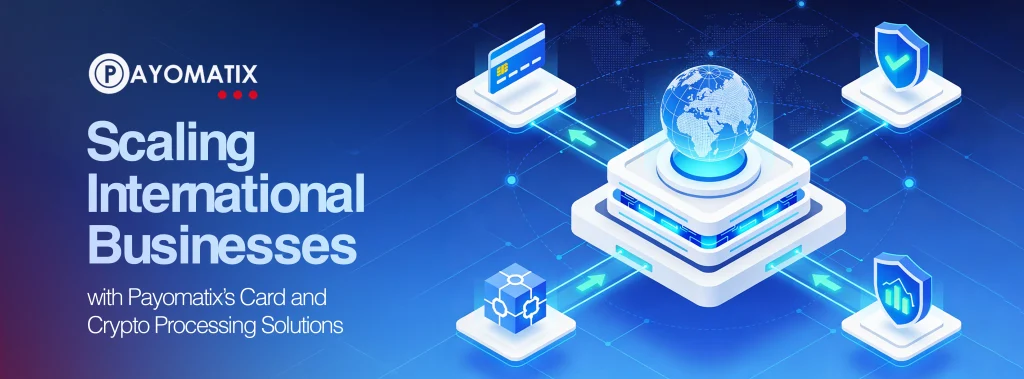
A unified payment orchestration layer allows businesses to connect to multiple gateways, acquirers, and payment methods through a single integration.
Transactions can be routed dynamically based on geography, currency, cost, and performance, improving success rates and reducing dependency on any single provider.
2. Local Payments, Global Control
Customers expect to pay using familiar local methods, while businesses need centralized control.
Modern platforms enable local payment acceptance across regions while providing global visibility into transactions, settlements, and performance from one dashboard.
3. Multi-Currency and Cross-Border Settlements
Handling multiple currencies efficiently is critical for global merchants.
Advanced payment infrastructure supports multi-currency pricing, optimized FX handling, and faster cross-border settlements, improving cash flow and transparency.
4. Scalable Risk and Compliance
As transaction volumes grow, so does risk.
Global payment platforms embed KYC, AML, fraud detection, and transaction monitoring directly into payment flows, helping businesses scale without increasing compliance overhead.
5. Centralized Reconciliation and Reporting
Instead of reconciling data across multiple providers and regions, businesses gain a single source of truth for payments, refunds, chargebacks, and settlements.
This reduces manual effort and accelerates financial close cycles.
How Payomatix Helps Global Merchants Scale
Payomatix provides a global payment infrastructure designed specifically for merchants and businesses operating across borders.
With Payomatix, businesses can:
- Accept payments across multiple countries and currencies
- Connect to multiple gateways and acquirers through one API
- Optimize routing for higher approval rates
- Manage settlements, refunds, and chargebacks centrally
- Stay compliant across regions with embedded risk controls
- Scale payment volumes without rearchitecting systems
Instead of managing fragmented payment stacks, global merchants operate on a single, intelligent payment layer.
Use Cases Across Cross-Border Businesses
Global E-commerce Brands
Improve checkout performance across regions while managing payments centrally.
Marketplaces and Platforms
Handle seller onboarding, split settlements, and cross-border payouts efficiently.
SaaS and Subscription Businesses
Support multi-currency billing, recurring payments, and global customer bases.
Fintech and Digital Businesses
Build scalable payment flows that adapt to regional requirements and growth.
FAQs: Scaling Payments for Global Businesses
1. Why do global merchants need more than one payment gateway?
Different regions have different performance, costs, and payment preferences. Multiple gateways improve resilience, approval rates, and regional coverage.
2. How does payment orchestration help cross-border businesses?
It centralizes multiple payment providers under one system, enabling intelligent routing, failover, and unified reconciliation.
3. Can global businesses manage multiple currencies easily?
Yes. Modern payment platforms support multi-currency pricing, acceptance, and settlement with centralized reporting.
4. How important is compliance when scaling internationally?
Critical. Cross-border payments involve regulatory requirements across jurisdictions. Embedded compliance reduces risk and operational burden.
5. Is Payomatix suitable for high-volume global merchants?
Yes. Payomatix is built for scale, supporting enterprise-grade volumes and complex cross-border payment workflows.
Conclusion
Scaling globally is no longer just about entering new markets. It is about building the right payment foundation to support that growth.
For global merchants and cross-border businesses, success depends on payment infrastructure that is unified, intelligent, and scalable by design.
With Payomatix, payments stop being a barrier to growth and become a strategic advantage powering global expansion with confidence.