In today’s digital economy, businesses often rely on multiple payment gateways, processors, and currencies to serve their global customer base. While this multi-channel approach offers flexibility, it also brings a major challenge — payment reconciliation.
Reconciling transactions across platforms, banks, and currencies can quickly become complex, error-prone, and time-consuming. That’s where Payment Orchestration Platforms (POPs) come in — transforming how businesses manage and reconcile payments with accuracy and speed.
What Is Payment Orchestration?
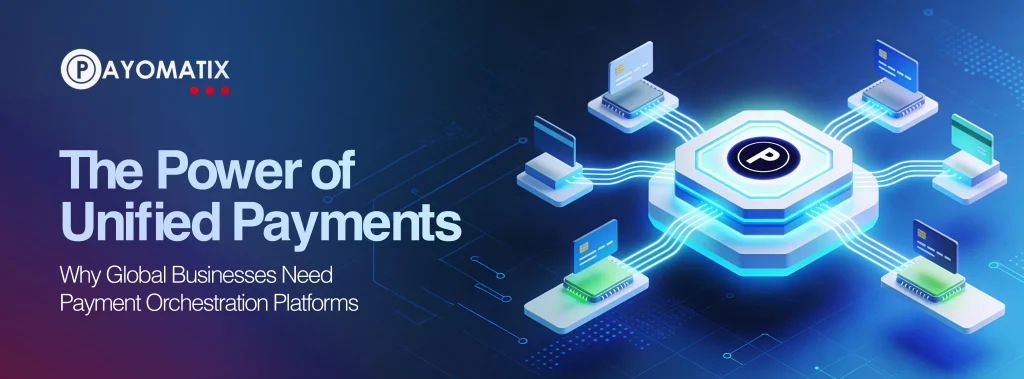
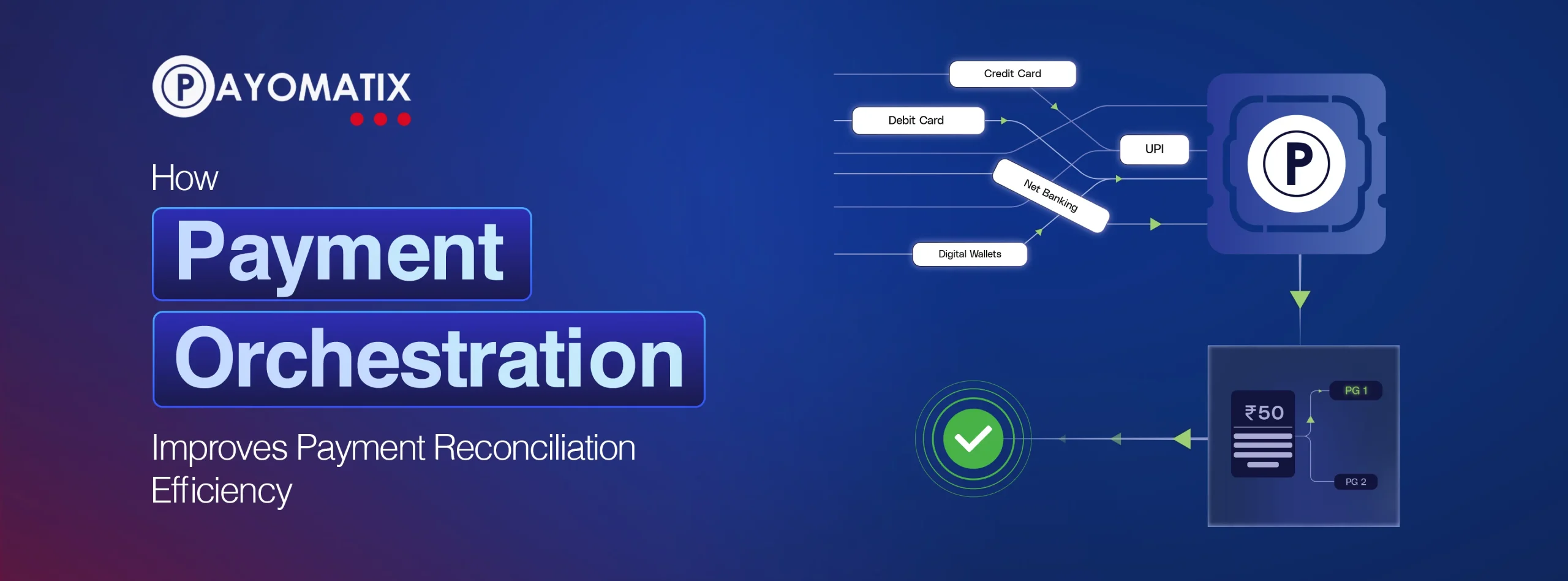
Payment Orchestration is the process of managing the entire payment flow through a unified platform. Instead of dealing with multiple integrations for gateways, fraud tools, and acquirers, a payment orchestration layer centralizes all these operations — routing, authorization, settlements, and reconciliation — from one dashboard.
Platforms like Payomatix enable businesses to connect multiple payment providers through a single integration, automatically optimize routing, and simplify backend operations such as settlement tracking, refund management, and reconciliation.
The Challenge: Complex and Fragmented Reconciliation
Without orchestration, businesses often face:
- Multiple data sources (gateways, banks, processors) that don’t sync in real time.
- Manual reconciliation, leading to delays and accounting errors.
- Inconsistent transaction data, especially in cross-border payments.
- Difficulty in identifying chargebacks, refunds, or duplicate transactions.
These inefficiencies can lead to reporting inaccuracies, longer financial closing cycles, and higher operational costs.
How Payment Orchestration Simplifies Reconciliation
A Payment Orchestration Platform brings order to this chaos by automating the collection, matching, and validation of transactions across different systems. Here’s how it works:
1. Centralized Transaction Data
All payment data — from multiple gateways, processors, and currencies — is captured in one place. This eliminates the need to download and manually compare data from different sources.
2. Automated Matching and Settlement
The platform automatically matches transaction records with settlement reports from banks and acquirers. This reduces the chances of mismatches and reconciliation delays.
3. Real-Time Reporting
Businesses gain instant visibility into approved, declined, and refunded payments. Real-time insights help identify discrepancies quickly and ensure faster resolution.
4. Simplified Accounting
Integrated reconciliation tools generate unified reports for finance teams, making it easier to close books and maintain financial accuracy.
5. Reduced Human Error
Automation reduces dependency on manual intervention, cutting down on errors and ensuring cleaner financial records.
Benefits of Payment Orchestration for Reconciliation
- Faster Financial Close Cycles: Real-time data updates ensure quicker month-end reconciliation.
- Improved Accuracy: Automated matching minimizes inconsistencies and mismatched entries.
- Operational Efficiency: Less manual effort means finance teams can focus on analysis, not admin.
- Global Scalability: Supports multiple currencies, processors, and settlement models effortlessly.
- Enhanced Transparency: Unified dashboards make it easy to audit and track payments end-to-end.
Why Businesses Choose Payomatix for Payment Orchestration
Payomatix offers a full-stack orchestration layer designed to optimize payments and simplify backend operations.
With API-driven architecture, real-time reconciliation, and cross-border settlement support, Payomatix empowers businesses to manage global payments seamlessly — while ensuring compliance, accuracy, and transparency.
Whether you’re a fintech, marketplace, or enterprise with multi-provider payment systems, Payomatix helps you reconcile efficiently and operate confidently.
FAQs: Payment Orchestration and Reconciliation
1. What is payment reconciliation?
Payment reconciliation is the process of matching transaction data from payment gateways with settlement data from banks or acquirers to ensure accuracy and completeness.
2. How does payment orchestration help in reconciliation?
Payment orchestration automates the collection, matching, and validation of data from multiple payment sources, making reconciliation faster and error-free.
3. Can Payomatix support multiple payment gateways and currencies?
Yes. Payomatix integrates with multiple global gateways, processors, and currencies to offer unified payment management and reconciliation.
4. Is payment orchestration useful for cross-border businesses?
Absolutely. It simplifies multi-currency settlements, reduces FX mismatches, and provides transparent reporting for global operations.
5. How secure is reconciliation data in Payomatix?
Payomatix ensures full compliance with PCI DSS and employs encryption and tokenization to secure all transaction and reconciliation data.
Conclusion
Payment reconciliation doesn’t have to be a manual, time-consuming process. With Payment Orchestration, businesses can automate financial tracking, enhance accuracy, and gain real-time insights into their global transactions.
Payomatix Payment Orchestration Platform bridges the gap between payment providers, acquirers, and finance teams — ensuring every transaction is tracked, verified, and reconciled efficiently.
When your payments are orchestrated, your operations stay in harmony.